Traditional advice regarding faith and broken marriages often drops straight into a list of checkboxes. We immediately look for the legal loopholes, peering through a magnifying glass to see – can a Christian divorce and remarry. But what if the answer isn’t a compliance audit? What if true biblical faithfulness actually starts when we look past the courtroom rules and focus on the human souls left standing in the wreckage?
Asking the Wrong Questions about Biblical Grounds for Divorce
When passions run high, it is easy to become intensely interested in isolated, legalistic questions such as:
- What are the biblical grounds for divorce?
- Is it a sin to remarry?
- Does God really hate divorce?
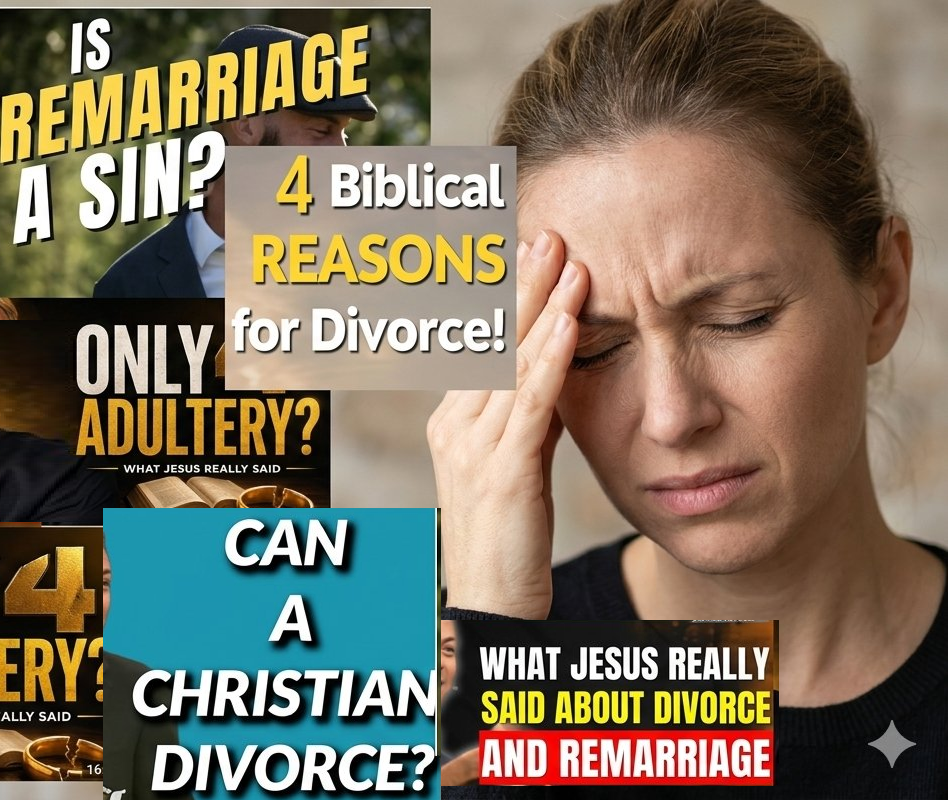
While those questions may carry legitimate significance for Christians, they do not constitute the whole moral landscape. Many Bible teachers point to scriptures and tease out a number what they call “exceptions” for divorce. I know first hand how living under the weight of a broken relationship, loneliness, or betrayal can be devastating, but we don’t have to stay stuck in dry legalism. We can choose a different path forward. We can exchange sterile rule-following for the compassionate heart of God. It begins with a simple shift: We must realize that commands are not an end unto themselves. They exist for the sake of human beings affected by our actions, and that matters deeply to God.
Don’t reduce the question of marriage and divorce to technicalities. If you do, you can miss the very things Jesus called the weightier matters.
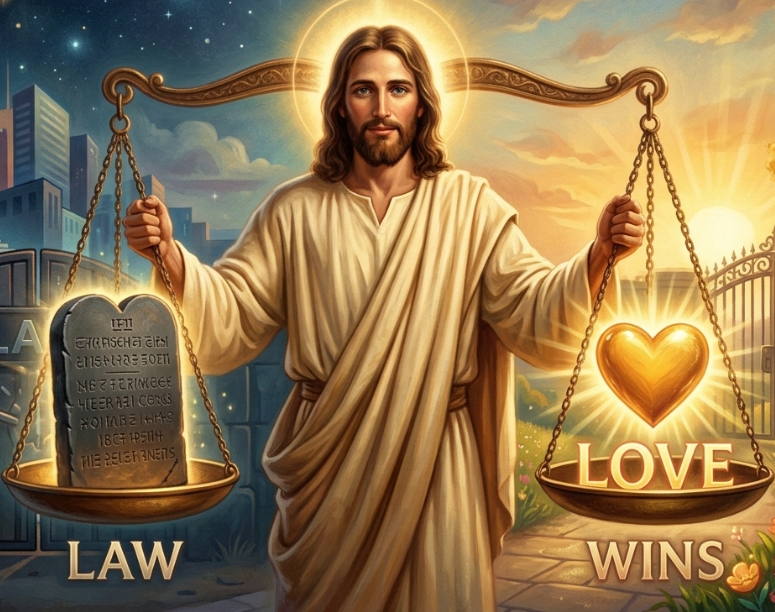
Christ’s Framework: Love Over Law
What did Jesus say about divorce? He basically said don’t do it. (Matthew 19:6) What did He say about remarriage? He basically said it’s adultery. (Luke 16:18) Just like we see today with pastors and teachers, the religious leaders of Jesus’ day pressed Him to answer “but what if” questions. But Jesus consistently responded to legalistic traps by redirecting his audience to God’s original design for humanity. Instead of engaging in superficial debates over the technicalities of religious law, He elevated the conversation to the timeless character and intentions of the Creator.
In Matthew 23:23, Jesus provides a clear lens for evaluating religious obligations: “You tithe mint and dill and cumin, and have neglected the weightier matters of the law: justice and mercy and faithfulness.” Jesus doesn’t tell the Pharisees that the rules are completely irrelevant. Instead, He exposes a hard heart that uses microscopic compliance to cover neglect for others.
This mirrors His teaching on the Sabbath in Mark 2:27, where He notes, “The Sabbath was made for man, not man for the Sabbath.” Confronted with a rigid interpretation of the law, He reorients the conversation in Mark 3:4 by asking: “Is it lawful on the Sabbath to do good or to do harm, to save life or to kill?” The ultimate standard is what loyalty to God requires us to do for the people involved.
The True Weight of Fallout from Divorce and Remarriage
Biblical morality cannot happen in a sterile vacuum because actions carry profound, cascading human consequences. When someone spends enormous energy debating legal exceptions, they often minimize the immense weight that the fallout drops onto families:
The Spouses Involved
On the Holmes and Rahe Stress Scale , divorce ranks as the second most stressful life event a human being can experience, eclipsed only by the physical death of a partner. It is excruciating to give your whole self to someone only to be cast aside for someone else. Beyond the emotional trauma, a single spouse might be suddenly forced to manage a household alone, find new employment, navigate changing social circles, and search for a new church home.
The Children of Divorce
Research published in Psychiatry Research indicates that children who experience parental divorce face a 41% increased risk of depression over their lifetimes. Children overwhelmingly want their families to remain together, and the resulting instability frequently leads to long-term anxiety and adjustment challenges.
The Extended Family & Finances After Divorce
Future holidays, weddings, and births are permanently fractured events, forcing generations of extended family members to divide time or navigate precarious relationship dynamics for decades. Financially, maintaining separate households drains resources from the children. Remarriage frequently shifts long-term inheritance completely away from biological children and grandchildren over to a new spouse.
The Christian Witness After Divorce
Walking away from a covenant fundamentally alters your spiritual witness. How can you authentically counsel others to stay and fight for their marriages? Even when you stay silence, a remarriage communicates the message to observers that breaking a family covenant works out completely fine in the end.
The Vulnerable Caught in the Middle
The weight can fall heaviest on those completely unable to influence the choices being made around them, for example a non-verbal, disabled child who cannot advocate for himself, voice his desires, or understand his increasingly fragmented world. Sadly, it may be easier for some parents to disconnect from children who can’t communicate, because they will never be able to utter a complaint.
Asking the Right Questions about Divorce and Remarriage
When we obsess over the boundaries and regulations in scripture, we miss a much more demanding line of inquiry:
- Will this do anyone harm?
- Are faith, hope, and love on display?
- Has God’s wisdom been sought in the situation?
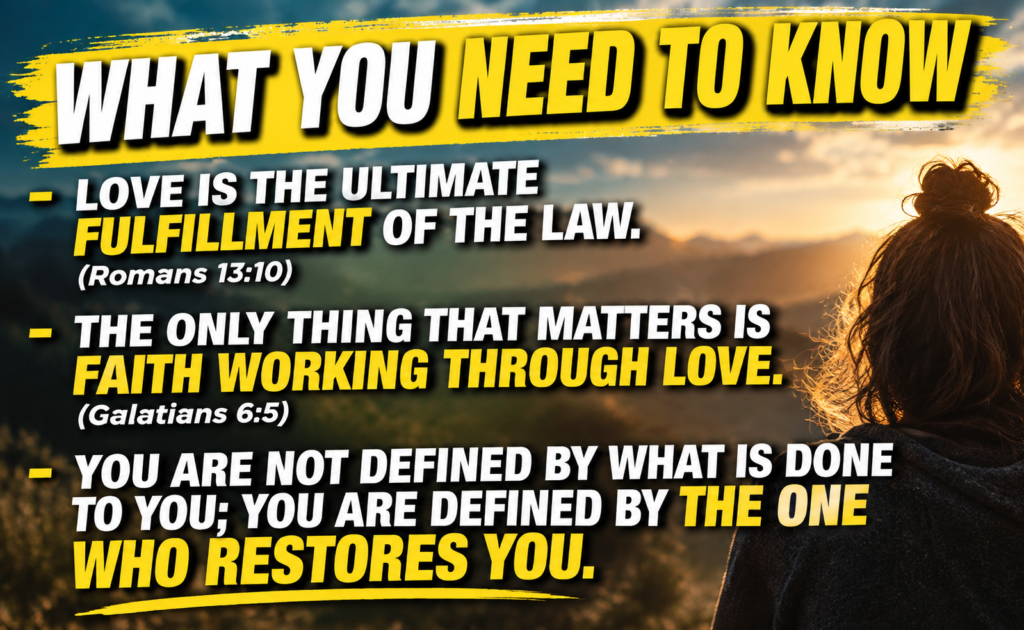
Today, let us overflow with thankfulness that God’s desire for our lives is defined by grace, His motives are shaped by love, and His rules are meant for our ultimate good.
Reflection & Prayer
Take a quiet moment to sit before the Lord. Release the need to justify your actions. Hand over the deep hurts caused by broken covenants.
Father, help us to see your commands through the lens of your love. Forgive us for the times we search for shortcuts or boundaries rather than looking at the hearts of the people you have placed in our care. Bring your profound comfort to the spouses, children, and vulnerable ones carrying the heavy weight of broken promises. Give us hearts of true faithfulness, justice, and mercy today. Amen.
Discussion Questions
- Self-Reflection: In what areas of your life or your relationships are you tempted to look for a “technical exception” rather than asking what love and mercy require of you?
- Action-Oriented: What is one practical way you can support, protect, or speak up for a vulnerable person or child in your circle who is currently enduring the fallout of a broken family structure?
- Heart-Centered: How does shifting our focus from “Am I legally allowed to do this?” to “Does this do good or harm?” transform the way we understand biblical obedience?
For Further Study
Where else in the Bible do we see Jesus or Paul shifting a question about right and wrong into an answer that focuses on love for others?